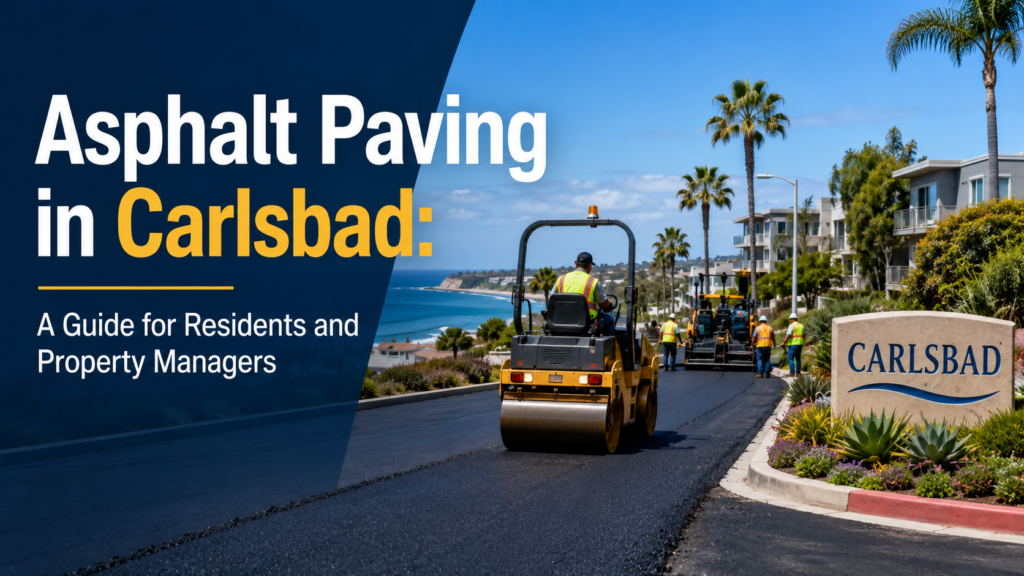
Carlsbad, situated along San Diego County’s northern coast, is one of the region’s most dynamic cities. It blends established residential neighborhoods, a thriving technology and biotech corridor, destination retail at the Carlsbad Premium Outlets and The Forum, resort and hospitality properties, and an increasingly dense urban village. With this diversity of land use comes an equally diverse range of Asphalt Contractor Carlsbad paving needs.
Whether it’s a residential driveway in La Costa, a commercial parking lot serving one of Carlsbad’s major employers, or an HOA-managed community road in one of the city’s many master-planned neighborhoods, asphalt work in Carlsbad requires expertise in a variety of applications and conditions.
Understanding Carlsbad’s Geographic Diversity and Asphalt Needs
Carlsbad covers more than 37 square miles and spans from the Pacific coastline through coastal canyon terrain to the inland hillside communities near Rancho Carlsbad and beyond. This geographic diversity means that asphalt paving conditions vary considerably:
- Coastal properties experience marine layer humidity, salt air, and higher moisture levels that influence asphalt aging
- Inland properties experience greater temperature variation and more intense UV exposure
- Canyon and hillside properties present drainage and slope challenges that require careful pavement engineering
- Commercial corridors along major roads experience high traffic volumes that stress pavement more quickly than residential applications
People Also Ask: Common Asphalt Questions in Carlsbad
What Are the Signs That an Asphalt Surface Needs Attention?
Property owners throughout Carlsbad frequently wonder whether their asphalt surfaces need maintenance or repair. Key indicators to watch for include:
- Fading and graying: As asphalt oxidizes under UV exposure, its surface transitions from deep black to lighter gray tones. This color change signals that the binder is drying out and the surface is becoming more brittle
- Hairline and surface cracking: Small cracks beginning to appear on an otherwise intact surface are an early warning sign. At this stage, crack sealing and sealcoating can halt progression
- Alligator cracking: Interconnected, multi-directional cracks resembling reptile scales indicate structural base failure and require more extensive repair
- Potholes: Fully developed holes in the pavement surface indicate areas where water has infiltrated, damaged the sub-base, and caused collapse of the surface layer
- Rutting: Depressions or grooves in the asphalt surface along traffic lanes indicate that the asphalt is too soft for the loads it carries or that the sub-base has shifted
- Water ponding: Areas where water collects rather than draining away after rain indicate grading problems that, if unaddressed, will rapidly accelerate pavement deterioration
How Are Commercial Parking Lots Maintained Differently from Driveways?
Commercial parking lots in Carlsbad serving office parks, retail centers, restaurants, and hotels face a different set of demands than residential driveways. Key differences include:
- Traffic volume and vehicle weight: Commercial lots experience far more vehicle trips daily and often accommodate service vehicles and delivery trucks heavier than passenger cars
- Fuel and oil exposure: Parking lots are more frequently exposed to vehicle fluid leaks, which can break down asphalt binders over time
- Safety and liability considerations: Damaged pavement in a commercial parking lot represents a liability risk, as trip hazards from cracked or uneven surfaces can result in injuries
- ADA compliance requirements: Commercial facilities must maintain compliant accessible parking spaces, access routes, and signage, which must be considered in any repaving project
- Business continuity: Commercial parking lot maintenance must be phased and scheduled to minimize disruption to tenants, customers, and operations
An asphalt contractor Carlsbad commercial property owners work with needs to understand all of these factors to develop effective maintenance programs for commercial applications.
What Is the Role of Drainage in Pavement Longevity?
In Carlsbad’s climate, the relationship between drainage and asphalt longevity cannot be overstated. While the city averages relatively modest annual rainfall, when rain does arrive particularly during El Niño years the storms can be prolonged and intense.
Proper drainage design for asphalt surfaces includes:
- Surface grading: Pavement must be installed with a slight slope (typically 1-2%) to direct water toward appropriate collection points rather than pooling on the surface
- Catch basins and inlets: Collection points that gather surface runoff and direct it into underground drainage systems
- Perimeter drainage: Channels or swales at the edges of paved areas that intercept water running off adjacent landscaping before it undermines pavement edges
- Sub-surface drainage: In areas with poor soil drainage, perforated pipe systems within the aggregate base help carry water away from beneath the pavement
Drainage problems are the most common cause of premature asphalt failure in San Diego County. Addressing them proactively during installation or as part of a repair project dramatically extends pavement service life.
What Does the Asphalt Paving Process Look Like?
Understanding the basic steps involved in asphalt installation helps property owners in Carlsbad set realistic expectations and evaluate the quality of work being performed:
- Site preparation: Removal of the existing surface (if replacing), excavation to the required depth, and grading of the underlying soil
- Sub-base installation: Placement and compaction of the aggregate base course, which provides structural support and drainage
- Tack coat application: A thin layer of emulsified asphalt applied to the prepared base to promote adhesion between the base and the new asphalt
- Asphalt placement: The hot asphalt mix is delivered by truck, placed using a paving machine, and spread to a uniform thickness
- Compaction: Steel drum rollers compact the asphalt to achieve the required density, removing air voids and creating a smooth, durable surface
- Edge work and cleanup: Edges are formed cleanly, and the work area is cleared of debris
This process typically allows the surface to be opened to light traffic within 24 hours, though heavier loads should wait longer to allow the asphalt to fully cool and cure.
Sustainable Asphalt Practices in Carlsbad
Carlsbad is a community with strong environmental values and significant natural resources to protect, including its coastal wetlands, canyon wildlife corridors, and the Batiquitos Lagoon. Modern asphalt paving practices increasingly incorporate sustainability considerations:
- Reclaimed asphalt pavement (RAP): Old asphalt removed during repaving can be recycled into new mixes, reducing the demand for virgin materials and lowering the carbon footprint of the project
- Warm-mix asphalt: Technology that allows asphalt to be produced and placed at lower temperatures, reducing fuel consumption and emissions during production
- Permeable asphalt: In appropriate applications, permeable asphalt allows stormwater to infiltrate through the pavement surface, reducing runoff and recharging groundwater
As Carlsbad continues to grow and evolve, asphalt infrastructure will remain central to its mobility and function. Understanding the full picture of asphalt paving from installation to maintenance to sustainability helps every property owner contribute to maintaining high standards throughout this exceptional city.